Viticulture - Winter Pruning
Among my first discoveries in viticulture was the realization that growing grapes and making wine are two fundamentally different things. Viticulture encompasses a wide range of activities: spreading compost, thinning buds, thinning shoots, hedging, thinning clusters, foliar spraying, and more.
For me, one of the most exciting and important activities in the life cycle of wine is the moment of vineyard pruning.
By Gadi Saar.
For me, one of the most exciting and important activities in the life cycle of wine is the moment of vineyard pruning.
By Gadi Saar.
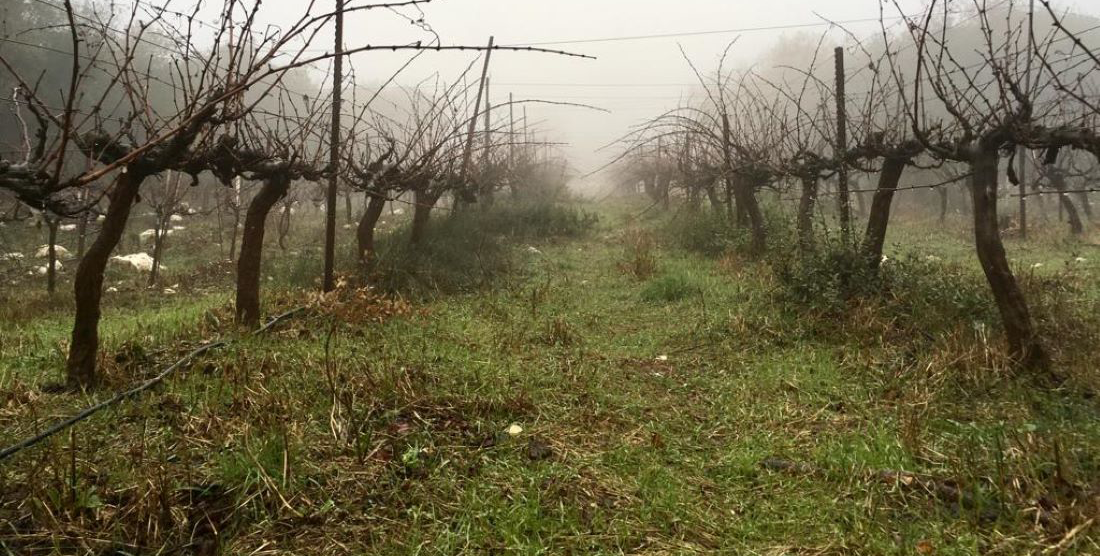
The moment of pruning is a unique moment in itself - winter, quiet, usually the entire vineyard environment is wet and glistening during the pruning period.
Much life is stirring around, but unlike the insect- and bird-filled summer months, winter life is mostly quiet and hidden.
Pruning days are the days when a variety of variables must be considered, including the vineyard's strength in bearing yield, the vines' resilience,
and their ability to pass the season in a balanced way without deficiencies, and of course, what we as winemakers want to receive at the end of the season.
Every year brings different weather, a different wind regime, different intensities of fungi that develop with humidity and make it difficult for the vine to reach the finish line with perfect ripeness, and many other variables.
We need to try and anticipate the difficulties and surprises to come, when what we have in front of our eyes during pruning are the defoliated vines with the branches of the past season. And we also have each other, to hold on tight and be positive in spirit, and strong in our path.
Pruning - a time to stop, talk, and sometimes stand over a single vine for 30 minutes and think together about the optimal path for it for the coming season. If the situation is complicated and there are disagreements, a coffee break next to the vine is even required.
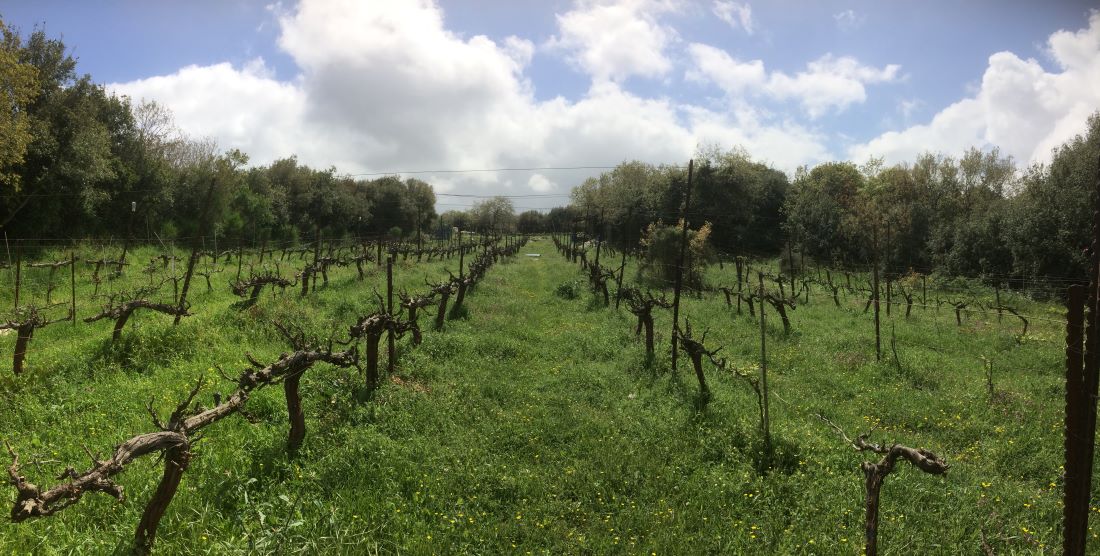
Most of the vines in the vineyard are "VSP" trained - their arms extended to the sides, but there are also a number of vines in "goblet" pruning.
Much life is stirring around, but unlike the insect- and bird-filled summer months, winter life is mostly quiet and hidden.
Pruning days are the days when a variety of variables must be considered, including the vineyard's strength in bearing yield, the vines' resilience,
and their ability to pass the season in a balanced way without deficiencies, and of course, what we as winemakers want to receive at the end of the season.
Every year brings different weather, a different wind regime, different intensities of fungi that develop with humidity and make it difficult for the vine to reach the finish line with perfect ripeness, and many other variables.
We need to try and anticipate the difficulties and surprises to come, when what we have in front of our eyes during pruning are the defoliated vines with the branches of the past season. And we also have each other, to hold on tight and be positive in spirit, and strong in our path.
Pruning - a time to stop, talk, and sometimes stand over a single vine for 30 minutes and think together about the optimal path for it for the coming season. If the situation is complicated and there are disagreements, a coffee break next to the vine is even required.
Most of the vines in the vineyard are "VSP" trained - their arms extended to the sides, but there are also a number of vines in "goblet" pruning.
One of the dangers in the way is the hail that is expected to come in March and sometimes even in early April. Strong hail can be a real blow. Many buds were hit last spring when we finished pruning the vineyard in early March, and on the 13th of the month, strong hail struck our mountain.
From our perspective, the aim is to prune as late as possible, close to budding. When the vine is still in a deep dormancy but about to awaken, with rising spring temperatures, and a lower chance of hail.
Correct pruning is essential for the life of the vine. One must consider the cutting angle, the main sap flow lines so as not to create problems with nutrient and water transport within the vine, the treatment of resulting stubs, and of course, the removal of the pruned canes from the plot at the end of the process to prevent a breeding ground for burrowing insects that like to create holes and problems within the vine.
The common way to dispose of the pruned canes in European wine countries is by traditional burning that takes place in the vineyard. We prefer to avoid burning the canes due to air pollution and choose to shred and compost them, thereby returning their nutrients to the soil from which they came.
Pruning time is a precious time. Drawing conclusions, looking inward and outward, and wishing the vine and the winemaker good luck in their next growing season.
From our perspective, the aim is to prune as late as possible, close to budding. When the vine is still in a deep dormancy but about to awaken, with rising spring temperatures, and a lower chance of hail.
Correct pruning is essential for the life of the vine. One must consider the cutting angle, the main sap flow lines so as not to create problems with nutrient and water transport within the vine, the treatment of resulting stubs, and of course, the removal of the pruned canes from the plot at the end of the process to prevent a breeding ground for burrowing insects that like to create holes and problems within the vine.
The common way to dispose of the pruned canes in European wine countries is by traditional burning that takes place in the vineyard. We prefer to avoid burning the canes due to air pollution and choose to shred and compost them, thereby returning their nutrients to the soil from which they came.
Pruning time is a precious time. Drawing conclusions, looking inward and outward, and wishing the vine and the winemaker good luck in their next growing season.